Categories
Books

On 15th-Century Books

The term “incunabula” [in-kyoo-nab-yuh-luh] signifies the first generation of books produced in western Europe using movable type. Johannes Gutenberg’s bible, the signal achievement which heralded the advent of movable type among Europeans, rolled off his printing press in 1455. Later scholars settled on the entirely arbitrary date of January 1, 1501, as the cutoff point for incunabula: those produced after Gutenberg and before 1/1/1501 were outfitted with the fancy incunabula designation, and those produced on or after after that date were, for the most part, simply considered plain ol’ books.

Categories
Weeks Family

What’s in a Motto?

By David Ross, a Salisbury House Volunteer

Over the past seven years I have been a tour guide at the Salisbury House. In all that time, I am still finding objects that I have questions about. I guess I shouldn’t be surprised, with over ten thousand artifacts in the museum!

Categories
Books

The Black Sun Press and Harry Marks at Salisbury House

They were christened the “Lost Generation” by Gertrude Stein – the extraordinary creative generation in the 1920s and 1930s, including James Joyce, Ernest Hemingway, T. S. Eliot, Ezra Pound, John Steinbeck, William Faulkner, Igor Stravinsky, Isadora Duncan, George Gershwin, Aldous Huxley, F. Scott Fitzgerald, Henry Miller, Pablo Picasso, and many others.  Most of them lived around Paris and southern France, most were expatriates, and many became the core of what is known as “Modernism.”  Particularly among the writers, many were American.  One major port of call for the Lost Generation was the Parisian English language bookstore Shakespeare & Co. run by an American woman named Sylvia Beach.  Beach is best known as the publisher of James Joyce’s Ulysses.

Categories
History

Getting Stoned at Salisbury House

By David Ross, a Salisbury House Foundation Volunteer

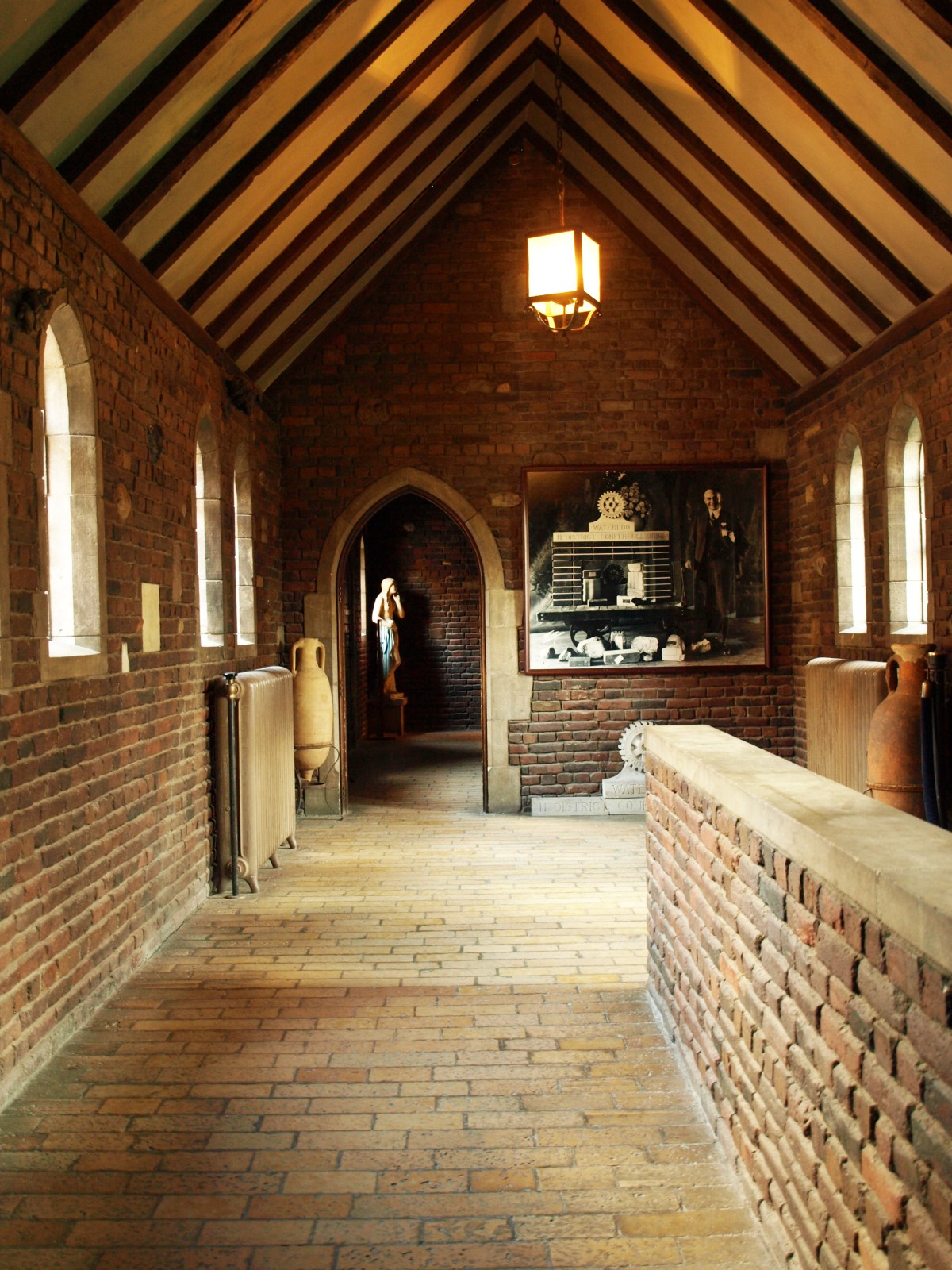
If you think that the title of this post is in reference to biblical punishments or the drug culture of the 1970s, you’d be wrong. I am talking about a little known area of Salisbury House called “Friendship Hall.”

Categories
Collection

Preservation Notes from Under the Oaks

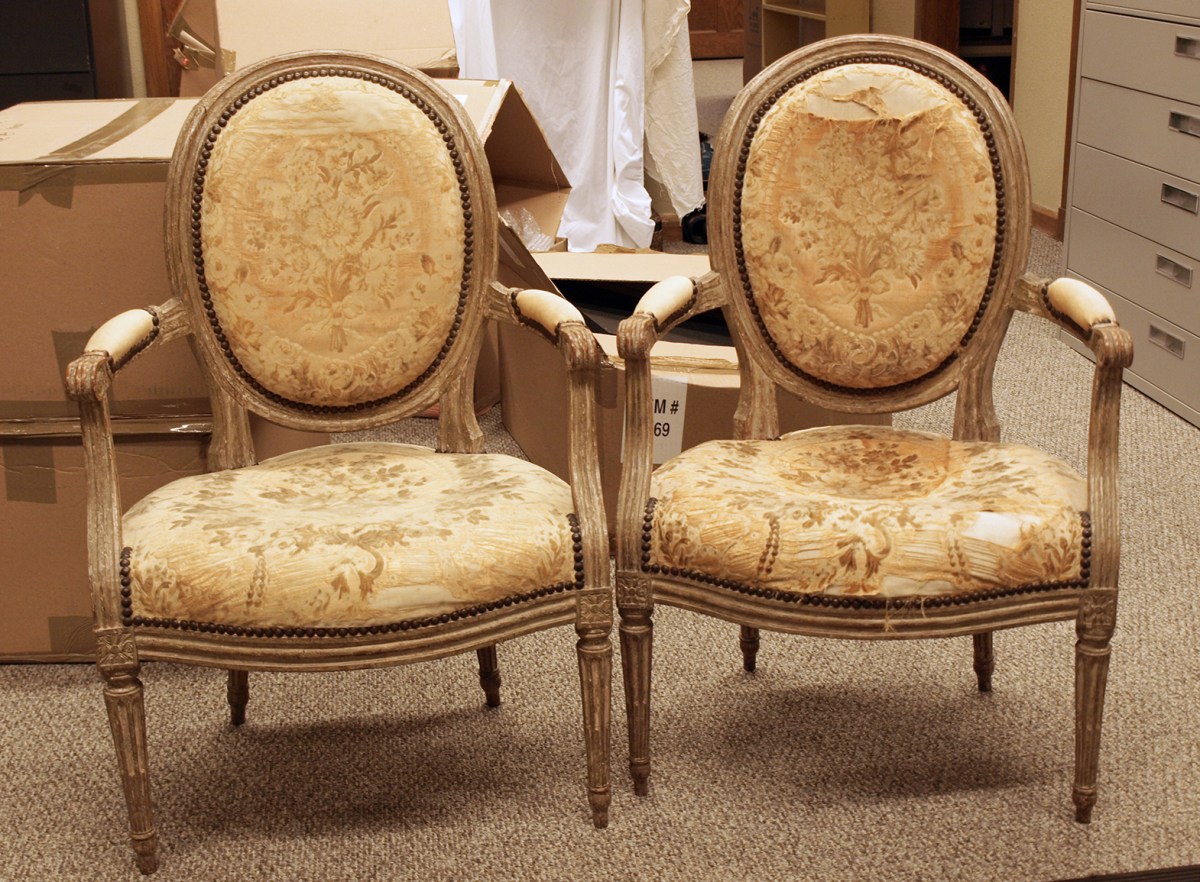
Textile preservation is underway at Salisbury House. The pair of Louis XVI style armchairs currently residing in Edith’s Dressing Room has certainly seen better days. The sunshine from the nearby window has not been kind to these two lovely ladies over the years. With the new curtains being installed in this room by the end of December, it was time to stabilize the chairs’ upholstery and preserve what remains of it.

Categories
History

From Overalls and Shovels to Fedoras and Cuban Cigars: The Gilded Age Inspiration for Salisbury House

There were three distinct aristocracies in Washington. One of these, (nick-named the Antiques,) consisted of cultivated, high-bred old families who looked back with pride upon an ancestry that had been always great in the nation’s councils and its wars from the birth of the republic downward. Into this select circle it was difficult to gain admission. No. 2 was the aristocracy of the middle ground . . . No. 3 lay beyond; of it we will say a word here. We will call it the Aristocracy of the Parvenus—as, indeed, the general public did. Official position, no matter how obtained, entitled a man to a place in it, and carried his family with him, no matter whence they sprang. Great wealth gave a man a still higher and nobler place in it than did official position. If this wealth had been acquired by conspicuous ingenuity, with just a pleasant little spice of illegality about it, all the better. This aristocracy was “fast,” and not averse to ostentation.

The aristocracy of the Antiques ignored the aristocracy of the Parvenus; the Parvenus laughed at the Antiques, (and secretly envied them.)

From Mark Twain’s The Gilded Age: A Tale of Today
Categories
Books

Tonight We’re Going to Pickle Like It’s 1797

We like to keep things light in August. It’s hot. It’s humid. And we’d all prefer to be sitting with our feet up, enjoying an adult beverage and some tasty snacks. To that end, our blog post last August explored a book from our collection that extolled the virtues of drunkards. This year, we turn our attention to the culinary arts: in particular, our 1797 edition of The Accomplished Housekeeper and Universal Cook, written by T. Williams and “the principal cooks at the London and Crown and Anchor Taverns.”

Categories
History

A Virtual Tour, c. 1927

By 1927, Salisbury House neared completion. The Weeks family had moved in the previous year, although the house would not be fully finished until 1928. During this year’s interim, a photographer captured images of the new home’s interior. These photographs, particularly when paired with exterior construction images, make a fascinating early study of the property.